ADVERTISEMENT
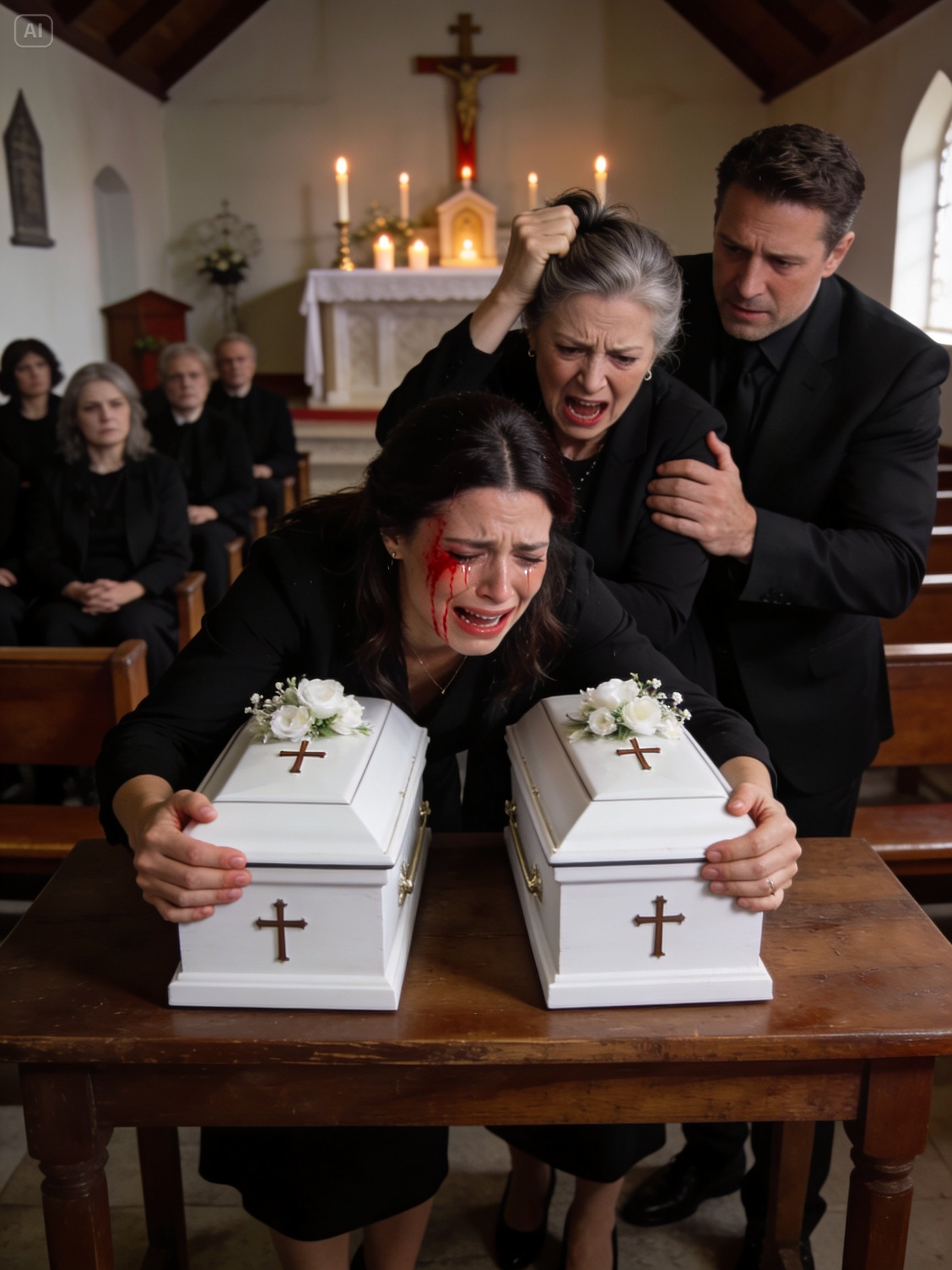
Trevor looked at his mother, then at Emma, then at the coffin, then at the floor, as if his brain was trying to build him an exit and couldn’t find one where he could still be a son while still looking like a father.
“Grandma said bad things about Mom,” Emma continued. “She said the children would be better off in heaven. She said Mom couldn’t handle it all.”
Not for incense or flowers.
Out of human fear, real fear, the kind that makes you sweat, tremble, and stick to your clothes.
That sentence devastated me in a completely new way.
Trevor finally approached Emma, but she stepped back again, and that small retreat was like another blow to the grave of our marriage.
I don’t know if at that moment I was looking for truth or permission to continue denying it.
Emma shook her head, sobbing.
The pastor stood up very slowly and turned to one of the funeral ushers.
I will never forget that scene, because for the first time that morning someone reacted as an adult should.
ADVERTISEMENT
